Introduction
Non-ablative fractional lasers remain one of the safest and most versatile technologies for skin resurfacing. Among them, the 1550nm erbium glass laser and the 1927nm thulium laser are the two most widely used wavelengths in modern dermatology. Although they look similar on the surface, their penetration depth, target chromophores, treatment indications, and clinical outcomes differ significantly.
This guide provides a complete 2025 comparison to help clinics, distributors, and practitioners choose the best wavelength for acne scars, pigmentation, rejuvenation, and melasma-safe treatments.
How 1550nm Erbium Glass Laser Works
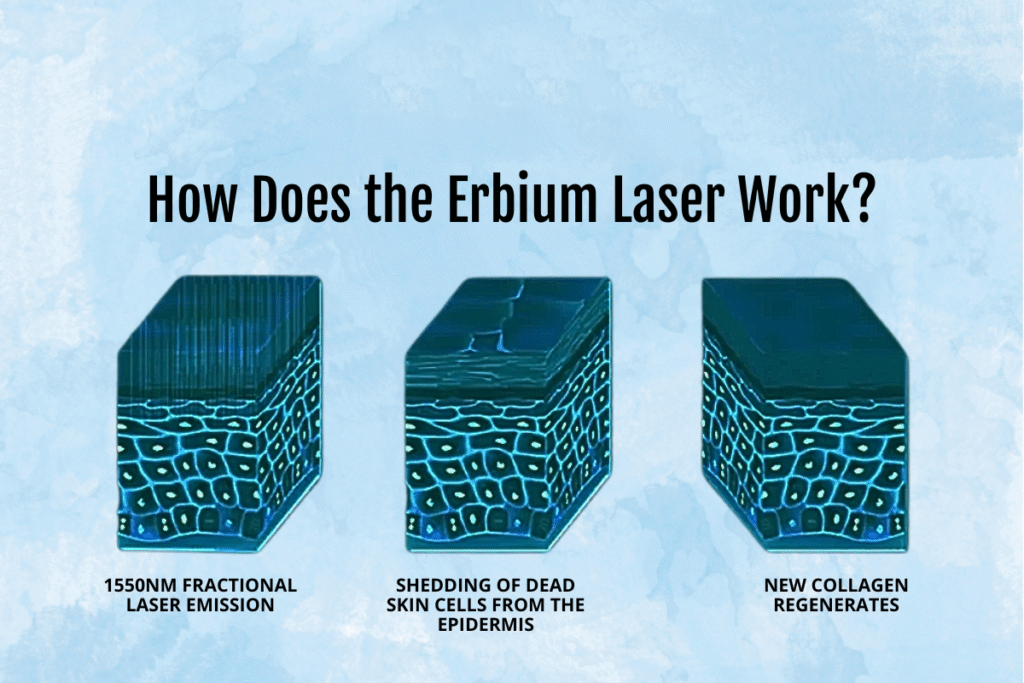
The 1550nm wavelength targets water in the dermis and penetrates up to 1.4 mm, making it ideal for deep collagen remodeling. It is classified as a non-ablative fractional laser, meaning it creates microscopic thermal zones (MTZs) without removing the epidermis.
Best for:
- Atrophic acne scars
- Fine lines & deep wrinkles
- Skin texture improvement
- Enlarged pores
- Mild skin tightening
- Overall rejuvenation
Why clinics love 1550nm:
- Works on deeper skin layers
- Excellent for acne scars and collagen rebuilding
- Suitable for all skin types (Fitzpatrick I–VI)
- Short recovery (1–3 days of redness)
- Lower PIH risk than CO2
CO2 vs 1550 for Ance Scarsor clinics comparing devices, see our in-depth guide:
👉 CO2 vs 1550 for Acne Scars
How 1927nm Thulium Laser Works
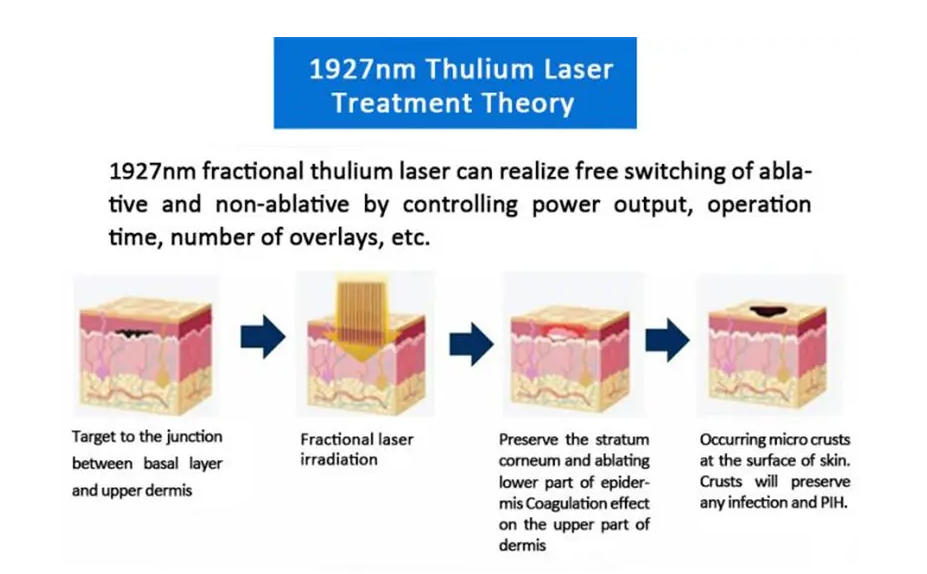
The 1927nm thulium wavelength has a higher water absorption rate and targets the epidermis and upper dermis (0.2–0.3 mm). It is especially effective for pigment removal, superficial resurfacing, and melasma-safe treatments.
Best for:
- Epidermal pigmentation
- Melasma (when properly managed)
- Sun damage
- Actinic keratosis
- Skin tone brightening
- Enlarged pores
- Mild texture improvement
Why clinics choose 1927nm:
- Gold standard for pigment and sun-damaged skin
- Very fast healing — usually 24–48 hours
- High patient satisfaction for skin brightness
- Lower downtime and minimal discomfort
1550nm vs 1927nm — Side-by-Side Comparison Table
| Feature | 1550nm Erbium Glass | 1927nm Thulium |
|---|---|---|
| Penetration depth | Deep (up to 1.4 mm) | Superficial (0.2–0.3 mm) |
| Best for | Acne scars, texture, wrinkles | Pigmentation, melasma, sun damage |
| Downtime | 24–72 hours | 12–48 hours |
| Pain level | Moderate | Mild |
| Risk of PIH | Low | Very low |
| Collagen remodeling | Strong | Mild–moderate |
| Skin brightening | Mild | Strong |
| Fitzpatrick suitability | I–VI | I–VI |
Which Laser Should Your Clinic Choose?
Choose 1550nm if your clients need:
✔ Deep acne scar revision
✔ Texture repair
✔ Anti-aging & collagen boosting
✔ Pore tightening
✔ More intensive clinical results
This wavelength is often preferred by dermatology clinics focused on acne scar treatments or non-surgical skin rejuvenation.
Choose 1927nm if your clients need:
✔ Pigmentation clearing
✔ Tone brightening
✔ Melasma-safe treatment
✔ Minimal downtime
✔ Photodamage reversal
This wavelength is commonly selected by clinics with a high volume of pigmentation patients or lighter rejuvenation packages.
Is a Dual-Wavelength 1550 + 1927nm System Better?
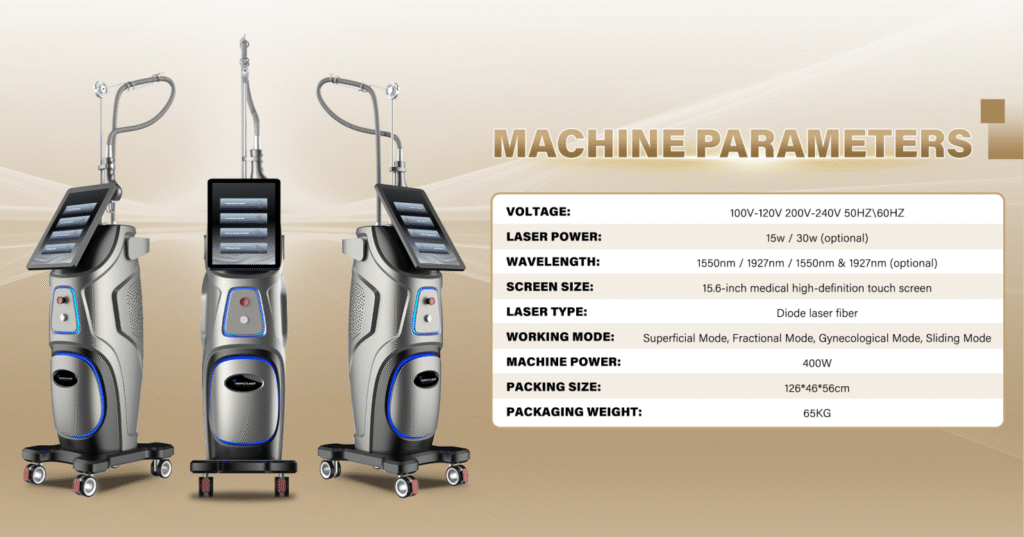
In 2025, most premium manufacturers offer dual-wavelength systems, allowing clinics to combine deep collagen remodeling with superficial brightening in the same session.
Advantages of a dual system:
- Targets multiple skin concerns at once
- Combines deep repair + surface renewal
- Higher ROI for clinics
- More treatment options and package flexibility
- Increased patient satisfaction
This is why dual systems are becoming the new standard for modern skin resurfacing.
Additional Insights for Clinics in 2025
As patient expectations continue to rise in 2025, clinics are shifting toward treatments that offer both visible results and minimal downtime. This is one of the main reasons why non-ablative fractional lasers such as 1550nm and 1927nm remain industry favorites. Compared with older technologies, these wavelengths provide safer options for all skin types, especially when dealing with ethnic or sensitive skin.
Many clinics now combine these wavelengths not only within the same device platform but also within the same treatment plan. For example, patients may begin with several sessions of 1550nm for texture and scar improvement, followed by a series of 1927nm treatments for tone refinement and pigmentation clearing. This layered strategy produces a balanced approach to rejuvenation—one that improves both the skin’s structural quality and its surface appearance.
Another trend for 2025 is the growth of premium membership programs. Clinics increasingly design treatment packages that incorporate monthly or quarterly 1927nm sessions to maintain brightness, paired with yearly 1550nm sessions for deeper repair. From a business standpoint, wavelength versatility increases patient return rates and strengthens long-term loyalty.
Finally, as non-ablative devices continue to advance, practitioners benefit from more stable energy delivery, wider safety margins, and improved cooling systems. These updates reduce patient discomfort and allow providers to work more confidently, even in higher Fitzpatrick types.