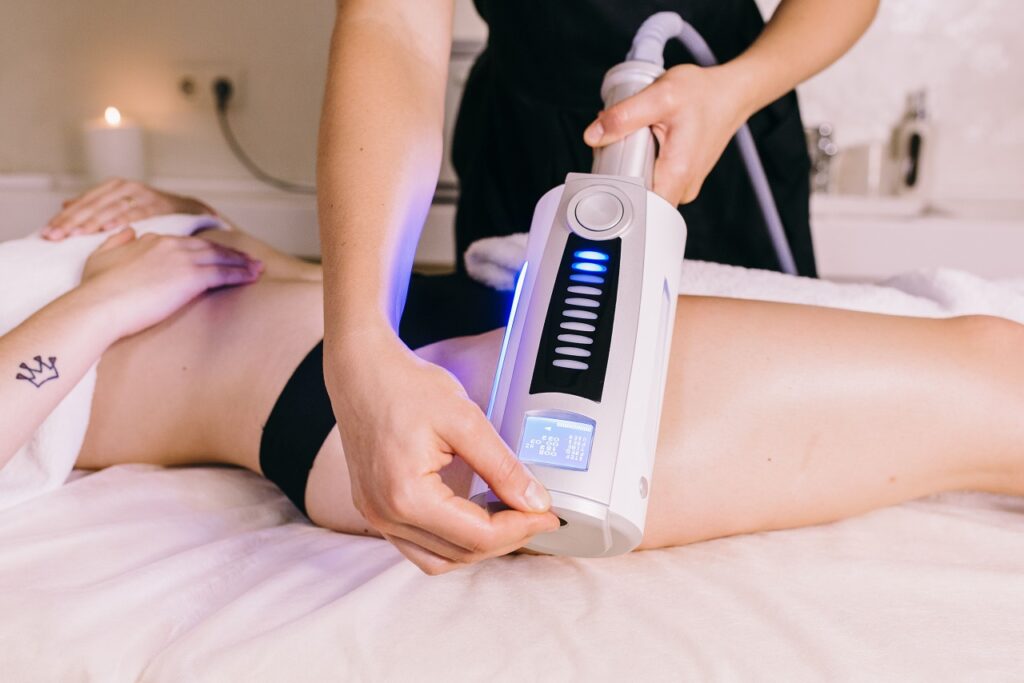
Introduction of CO2 vs 1550 for acne scar laser comparison
CO2 fractional laser and 1550nm non-ablative laser are two of the most frequently used technologies for improving acne scars. While both can significantly enhance skin texture, their mechanisms, downtime, and results differ greatly. Choosing the right treatment depends on scar type, skin type, and recovery tolerance.
This 2026 guide breaks down the differences between CO2 and 1550nm lasers—helping patients and clinics make the best decision based on clinical evidence and treatment goals.
If you want to understand how fractional laser work overall, see our full guide:
👉 What Is Fractional Laser?
What Is CO2 Fractional Laser acne scars?
CO2 fractional laser is an ablative wavelength (10,600nm) that removes microscopic columns of skin while heating the dermis. This dual action makes CO2 the most powerful option for:
- Deep acne scars
- Ice-pick and boxcar scars
- Severe texture irregularities
- Deep wrinkles
Because CO2 removes skin tissue, it triggers strong collagen regeneration and long-term remodeling.

Advantages of CO2
- Best for deep, stubborn acne scars
- Significant textural smoothing
- Long-lasting collagen production
- Fewer sessions required
Disadvantages
- Longer downtime (5–10 days)
- Risk of pigmentation in darker skin types
- Requires careful aftercare
What Is 1550nm Fractional Laser?
1550nm is a non-ablative fractional wavelength. It heats the dermis without removing the top layer of skin, making it gentler and safer for more skin types.
It is best suited for:
- Rolling scars
- Shallow boxcar scars
- Enlarged pores
- Uneven skin texture
- Mild to moderate acne scars
1550nm penetrates deeply (up to 1.4 mm) and stimulates collagen with significantly less downtime.

Advantages of 1550nm
- Safer for Fitzpatrick III–V
- Moderate downtime (1–3 days)
- Great collagen stimulation
- Suitable for sensitive or thin skin
Disadvantages
- Not strong enough for deep scars
- Requires multiple sessions
- Results are gradual
CO2 vs 1550nm: Detailed Comparison

| Feature | CO2 Fractional | 1550nm Non-Ablative |
|---|---|---|
| Depth | Ablative + deep dermal | Deep non-ablative |
| Strength | Very strong | Medium |
| Best For | Deep & ice-pick scars | Mild–moderate scars |
| Downtime | 5–10 days | 1–3 days |
| Risk of PIH | Higher | Low–moderate |
| Sessions Needed | 1–2 | 3–5 |
| Pain Level | High | Medium |
| Skin Types | I–III preferred | I–V safe |
Which Laser Is Better for Acne Scars in 2026?
Choose CO2 if:
- Your scars are deep, severe, or long-standing
- You want the most dramatic textural improvement
- You can accept downtime
- You have lighter skin (Fitz I–III)
Choose 1550nm if:
- Your scars are mild–moderate
- You want quicker recovery
- You have darker skin types
- You want safer, repeatable sessions
Combination Approach: The Best of Both Worlds
In 2026, many dermatologists recommend a hybrid treatment strategy:
- CO2 for the deepest scars (1 session)
- 1550nm for overall texture refinement (2–3 sessions)
This approach delivers smoother skin with balanced collagen remodeling and reduced risks.
For patients looking for a full acne scar treatment plan, they can read:
👉 How to Treat Acne Scars in 2026
For comparison with other wavelengths, see:
👉 1550nm vs 1927nm for Rejuvenation
Conclusion
CO2 fractional laser and 1550nm non-ablative laser both play essential roles in acne scar treatment.
- CO2 delivers stronger, deeper resurfacing and is unmatched for severe scars.
- 1550nm offers safer, gentler remodeling with minimal downtime.
The best choice depends on scar type, skin tone, and treatment preferences. When combined strategically, they can achieve the most dramatic and long-lasting improvements.
Additional Insights: Choosing the Right Laser in 2026
In 2026, clinics are increasingly relying on diagnostic frameworks to determine whether CO2 or 1550nm is more suitable for a particular acne-scar patient. One major factor is scar morphology. Boxcar, ice-pick, and sharply depressed scars typically respond better to the ablative nature of CO2, while rolling scars and softer depressions improve with the more gradual collagen stimulation of 1550nm. This is why many clinics begin each consultation with a scar-type assessment rather than simply recommending a single device for all patients.
Another important trend is skin-type safety. With growing demand from darker Fitzpatrick types, non-ablative options like 1550nm are increasingly valuable. Clinics are using 1550nm as the “foundation treatment,” building collagen over multiple visits, and then adding CO2 selectively to small areas of severe scarring. This targeted approach reduces risks while still achieving strong results.
From a business perspective, offering both wavelengths allows clinics to create tiered treatment plans: entry-level sessions using 1550nm and premium, high-impact packages using CO2. Patients appreciate having options that match their comfort level and downtime tolerance.
Most dermatologists now agree that the best outcomes come from customized laser protocols, adjusting density, pulse energy, and number of passes based on scar severity. With modern technologies and smart treatment planning, both CO2 and 1550nm remain essential tools for achieving smoother, more refined skin.